
Space Tech and Commercial Exploration: Shaping the Future
Are we on the verge of a new era in space exploration? This era is fueled by tech advancements and commercial efforts. We're seeing a rise in private investment and innovation, changing the face of commercial space exploration.
At the heart of this change are leaders like NASA, SpaceX, and Blue Origin. They're breaking new ground in what's possible. The mix of space technology and business is opening up new paths for growth and discovery.

Space technology and commercial space exploration
We're at the edge of this exciting journey. We'll look at the main trends, technologies, and players in the industry. The future of space tech looks bright, and we're eager to explore it further.
Key Takeaways
- The commercial space industry is growing fast.
- Private companies are leading in space tech innovation.
- NASA and other government agencies are teaming up with private firms.
- New trends and technologies are coming in commercial space exploration.
- The future of space tech is full of promise for discovery and growth.
The New Era of Space Exploration
The new era of space exploration is all about private companies leading the way. This change comes from better technology, lower costs, and new space companies. The aerospace world is seeing big changes because of this.
From Government Programs to Private Enterprise
For a long time, governments led space exploration. But now, companies like SpaceX and Blue Origin are taking over. They're making space travel cheaper and pushing the industry forward with new ideas.
Private companies are bringing speed and boldness to space travel. They're making it possible to quickly test and use new space technologies.
The Economic Impact of Space Commercialization
Space commercialization is changing the economy in big ways. It's opening up new business areas, like making satellites and space tourism. The growth of the space industry is also bringing in more money, creating jobs, and boosting the economy.
The effects of space commercialization are huge. It could start new industries and jobs that we can't even imagine yet.
Space Technology and Commercial Space Exploration: Current Landscape
The space technology and commercial space exploration fields are seeing a lot of innovation and competition. Private companies and governments are pouring a lot of money into these areas. This has led to big steps forward in satellite technology and other fields.
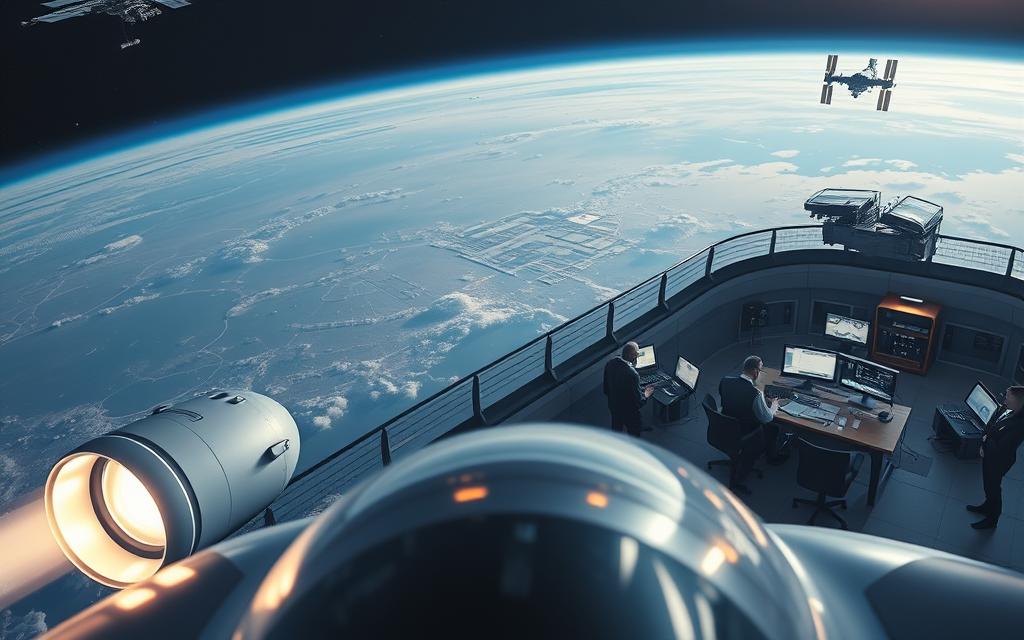
space innovation
Leading Companies Transforming the Industry
Companies like SpaceX and OneWeb are at the forefront of commercial space exploration. SpaceX has made it cheaper to get to space with its reusable launch systems. This has led to more launches and a variety of missions, including deploying satellites and sending people to space.
OneWeb is working on satellite technology to bring global internet to everyone. Other companies, like Blue Origin and Virgin Galactic, are also making big moves. Blue Origin is building the New Glenn launch vehicle, and Virgin Galactic is starting space tourism. These companies are pushing the limits of what's possible in space.
Investment Trends and Market Growth
The commercial space industry is getting a lot of investment. This is because of the industry's growth potential and the falling costs of space technology. Satellite technology is especially popular because of its potential to connect the world and provide valuable data.
Market trends show that investment in space technology will keep growing. New companies are joining the market, and old ones are getting bigger. This growth will lead to more innovation. It will open up new services and applications that will help many industries, from telecom to environmental monitoring.
Revolutionary Technologies Powering Space Innovation
The space industry is on the verge of a big change. New technologies are changing how we explore space. These changes are key for the success of future missions and make space research better and more efficient.
Reusable Launch Systems
Reusable launch systems are leading the way in space innovation. They make it cheaper to get to space. This technology opens up space for more missions, both commercial and scientific.
Cost Reduction and Sustainability Benefits
Reusable launch systems cut down on costs a lot. By using rockets over and over, the cost of launching goes way down. This makes space more affordable. It also helps the environment by reducing space junk.
Technical Challenges and Solutions
But, reusable launch systems come with big technical hurdles. They need strong materials that can handle many launches and landings safely. To solve these problems, we're using new materials and smart control systems.
Next-Generation Propulsion Technologies
New propulsion technologies are being made for better space missions. These changes are vital for exploring deep space. They will be crucial for future space research.
Additive Manufacturing in Space
Additive manufacturing, or 3D printing, is also a game-changer in space. It lets us make parts and tools as needed. This reduces our need for supplies from Earth and makes long space missions more sustainable.
As we keep innovating, these technologies will be key in shaping the future of space exploration and research.
The Aerospace Industry's Transformation
The aerospace industry is changing a lot. This change comes from new technology and different market needs. Old aerospace companies are facing new challenges and chances.
Traditional Aerospace Adapting to New Competition
Old aerospace companies are changing. They're investing in research and development, making partnerships, and buying new startups. For example, Lockheed Martin is working with NASA on new lunar tech. This is key as new companies like SpaceX and Blue Origin shake things up.
Businesses are becoming more flexible and quick. They're focusing on saving money and working better. They're using digital twins and data analytics to improve how they make things and work.

aerospace industry transformation
Supply Chain Evolution and New Business Models
The aerospace supply chain is changing. It's adapting to new space companies. This includes using additive manufacturing and new materials. New ways of making money, like satellite services and space solar power, are also coming up.
Public-private partnerships are growing. They let governments and companies work together on big projects. This teamwork is bringing new ideas and saving money, making space travel more possible and affordable.
Satellite Technology: Connecting Earth and Beyond
The future of global connectivity and earth monitoring depends on satellite technology. We're exploring new frontiers in space, and satellites are key. They help us communicate and watch our planet better.
Miniaturization and Mass Production Revolution
Satellites like CubeSats have changed the game. They're smaller, cheaper, and easier to make. This means we can launch more satellites often. They help with communication and watching the earth.
- Reduced launch costs
- Increased production rates
- Enhanced functionality
Mega-Constellations and Global Connectivity
Mega-constellations are making the internet global. Companies like SpaceX and Amazon's Kuiper Systems are leading the way. They want to bring fast internet to even the most distant places.
Key benefits include:
- Global internet coverage
- Enhanced data transfer rates
- Improved connectivity for remote areas
Earth Observation and Climate Monitoring Advances
Our ability to monitor Earth's climate and environment has improved. Satellites with advanced sensors give us detailed data. This helps protect the environment and inform policy.
Commercializing the Final Frontier: Space Tourism and Beyond
Space technology is getting better, making space tourism a real thing. It's changing how we see and explore space. This growth is opening up new chances for the space industry, pushing innovation and bringing in more money.
Current and Upcoming Space Tourism Options
Many companies are leading the way in space tourism, offering unique experiences. Virgin Galactic's SpaceShipTwo plans to take people on short flights into space. They'll get to feel weightlessness and see the Earth from above.
SpaceX's Starship is another big step. It aims to send people and cargo to the Moon, Mars, and other places in our solar system.
Blue Origin is also making big moves in space tourism. Their New Shepard program is for short flights into space, similar to Virgin Galactic's. These efforts are thrilling for space fans and mark a big change in how we explore space.
The Future of Commercial Space Habitats
As space tourism grows, so does the need for commercial space habitats. These habitats will help us stay in space longer, for more research, making things, and even tourism. Bigelow Aerospace is working on inflatable habitats for different uses, like research stations and space hotels.
Building commercial space habitats is key for long-term space missions and a human presence in space. As technology improves and costs drop, we'll see even bigger projects. This could include colonies on the Moon or Mars. The future of space depends on creating sustainable habitats in space.
Space Resources: Mining Asteroids, the Moon, and Mars
Space resources like asteroids, the Moon, and Mars are key for future space missions. We need to use resources from space to be sustainable. This means getting water for life and fuel, and mining valuable metals.
Valuable Resources Beyond Earth
Asteroids, the Moon, and Mars have lots of useful stuff. Asteroids are especially good for their metals like platinum and gold. The Moon has helium-3 for nuclear fusion. Mars has water ice for life support and fuel.
Technologies for Extraction and Processing
New tech is being made to get and use space resources. Robotic mining systems work in low gravity. In-situ resource utilization (ISRU) turns raw materials into things we can use, like water and oxygen.
Economic and Legal Frameworks
Using space resources brings up big questions about who owns what. The Outer Space Treaty says no country can own space bodies. But it doesn't talk about private ownership of space resources. As we move forward, we'll need new laws to manage space resources.
Space Research and Its Real-World Applications
Space research is changing how we see the universe and making life better on Earth. By exploring space, we find new technologies. These technologies help in many areas.
Microgravity science is a big area of progress. It has led to many discoveries.
Microgravity Science Breakthroughs
Microgravity research lets us study things we can't on Earth. For example, studying fluids in space has helped us understand fluid dynamics better. Some major discoveries are:
- Deeper understanding of basic physics
- Better study of material properties
- New insights into biology
From Space to Earth: Technology Transfer Success Stories
Technologies from space research help us on Earth. For instance, memory foam was made for safer plane seats. Now, it's in mattresses and pillows. Other examples are:
- Water cleaning systems from space are used globally.
- Space tech has made global communication better.
- Robotics from space are used in making things and healthcare.
These stories show how space research impacts our lives. They also highlight the potential for more innovations.
International Cooperation and Competition in Space
The modern space era is a mix of global teamwork and rivalry. Nations and companies are working together and competing in space. This is shaping the future of the aerospace industry.
National Space Programs and Commercial Partnerships
National space programs are teaming up with private companies. This partnership has led to big steps in space technology. For example, NASA's Artemis program is working with companies to make lunar landers.
This teamwork speeds up the development of space tech. It also makes the aerospace industry stronger and more varied. By combining government and private efforts, the industry can tackle tough challenges better.
The New Space Race: Geopolitical Implications
The return of space exploration has started a new space race. This race is changing global politics. The fight for space resources, tech, and strategic spots is getting fierce.
The space politics are complex. They involve national interests, private companies, and global groups. As the race grows, we need rules and agreements to share space benefits fairly and manage risks well.
Conclusion: Embracing Our Multi-Planetary Future
We've explored the exciting world of space tech and commercial exploration. It's clear we're on the edge of a new era in space development. The space technology and commercial space exploration we've talked about are changing the aerospace industry. They're driving space innovation and leading us towards a future with planets beyond Earth.
The satellite technology revolution, space missions, and new space exploration companies are expanding what's possible. As we go further, space research will keep helping us understand the universe and make life better on Earth.
We need to keep innovating, working together, and investing in space technology to face challenges. This will open up new chances for growth, discovery, and exploration. As we start this journey, we're not just shaping space travel. We're shaping our future as a species that spans multiple planets.
FAQ
What is driving the current advancements in space technology and commercial space exploration?
How is the commercial space industry impacting traditional aerospace companies?
What role is satellite technology playing in the commercial space industry?
What are the prospects for space tourism and commercial space habitats?
How is space research contributing to real-world applications?
What are the implications of space resource utilization for future space missions?
How is international cooperation and competition shaping the space industry?
What is the significance of reusable launch systems for the space industry?
How is the aerospace industry adapting to the changing landscape?
.png)
The ultimate guide to travel and tourism around the world
The Ultimate Guide to Travel and Tourism Around the World is a comprehensive blog designed for travelers of all kinds—from curious first-timers to seasoned explorers. It offers in-depth insights into global destinations, cultures, and experiences, helping readers plan meaningful and unforgettable journeys. The blog covers everything from iconic landmarks and hidden gems to travel tips, cultural etiquette, budgeting advice, and sustainable tourism practices. Readers can explore detailed destina


